The Ultimate Guide to Everest Base Camp Trek
Pasang Sherpa
Reiseschreiber
Everything you need to know before embarking on the world's most iconic trek — from permits and packing to altitude sickness and teahouse life.
The Everest Base Camp Trek is the most famous trek on earth — a bucket-list journey to the foot of the world's highest mountain. Winding through the legendary Khumbu region, past ancient Sherpa villages, glacial valleys, and towering Himalayan giants, it rewards every step with scenery few places on the planet can match. If standing beneath Mount Everest is your dream, this complete guide covers everything you need to know to make it happen.
Everest Base Camp Trek at a Glance
DestinationEverest Base Camp (5,364 m), Khumbu regionHighest pointKala Patthar (5,545 m)Typical duration12–14 daysTotal distance~130 km round tripDifficultyChallenging (sustained high altitude)Start pointLukla (reached by mountain flight)Best seasonsAutumn (Oct–Nov) and Spring (Mar–May)AccommodationTeahouses / mountain lodges
Where Is Everest Base Camp?
Everest Base Camp sits at the foot of Mount Everest (8,848.86 m) in Nepal's Khumbu region, within Sagarmatha National Park — a UNESCO World Heritage Site . The trek begins with a dramatic flight to Lukla and follows the Dudh Koshi River valley up through Sherpa villages and pine forests, into the high, glacial heart of the Himalaya.
The Classic Itinerary (Day by Day)
While itineraries vary, this is the tried-and-tested classic route, built around safe acclimatisation:
Day 1 — Fly to Lukla, trek to Phakding. A thrilling mountain flight to Lukla, then an easy walk down to Phakding (2,610 m).
Day 2 — Phakding to Namche Bazaar (3,440 m). Cross suspension bridges draped in prayer flags and climb into the Khumbu's bustling trading hub.
Day 3 — Acclimatisation day in Namche. A vital rest day with a short hike to help your body adjust; first views of Everest.
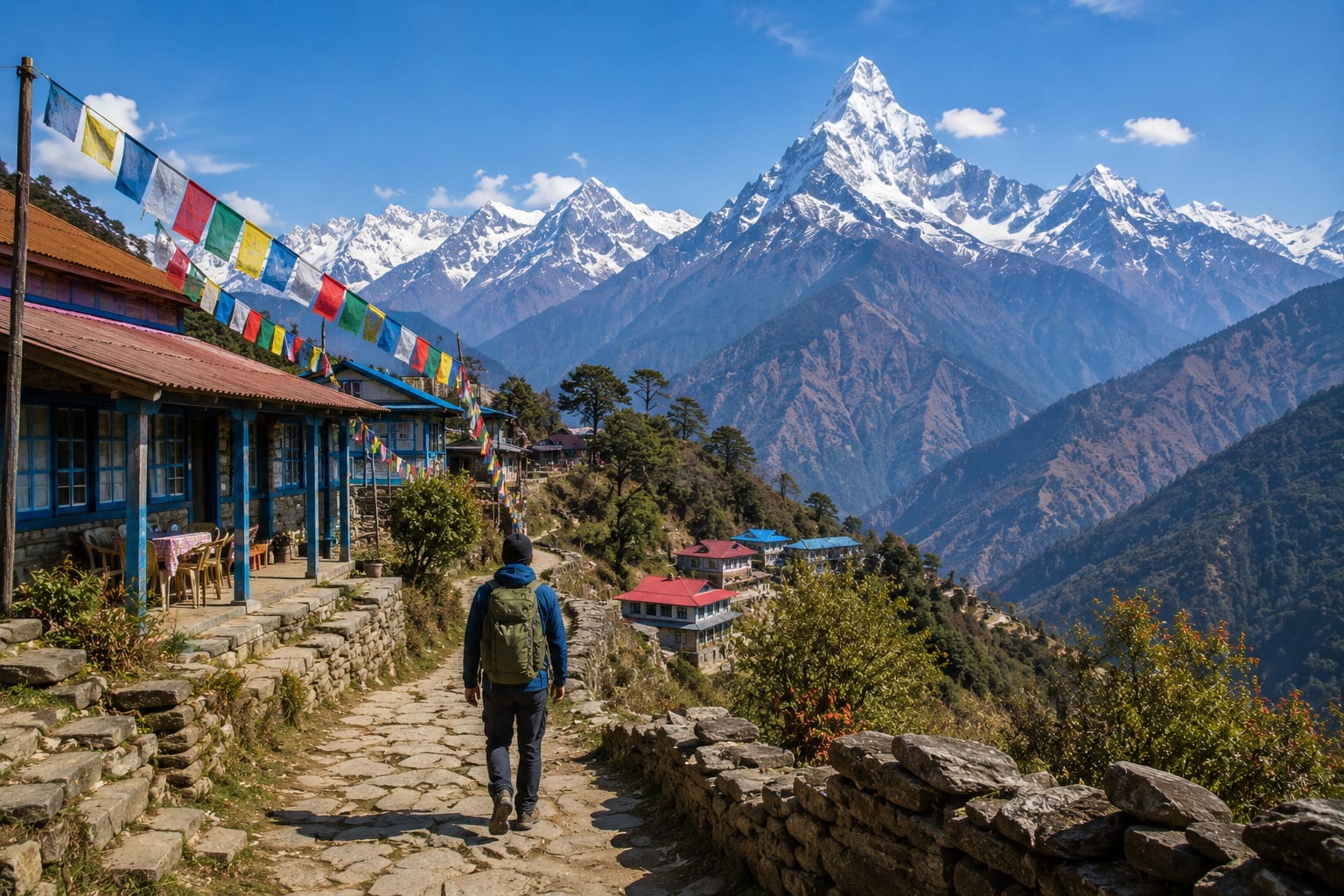
Day 4 — Namche to Tengboche (3,860 m). Trek to the spiritual heart of the region and its famous monastery, framed by Ama Dablam.
Day 5 — Tengboche to Dingboche (4,410 m). Climb higher into increasingly dramatic alpine terrain.
Day 6 — Acclimatisation day in Dingboche. Another important rest day with an acclimatisation hike.
Day 7 — Dingboche to Lobuche (4,940 m). A demanding day passing memorials to fallen climbers.
Day 8 — Lobuche to Gorak Shep, then Everest Base Camp (5,364 m). The big day — reach Base Camp itself and stand beneath the mountain.
Day 9 — Kala Patthar (5,545 m), descend to Pheriche. A pre-dawn climb for the finest sunrise view of Everest, then begin the descent.
Days 10–12 — Descend to Namche, Lukla, and fly to Kathmandu. Retrace the trail down through the valleys and fly back to the city.
Most operators build in extra buffer days to allow for weather delays — always a wise idea.
Best Time to Trek to Everest Base Camp
Two seasons stand out:
Autumn (October–November): the most popular season, with clear skies, stable weather, and superb mountain views . Trails are busier but conditions are at their best.
Spring (March–May): warmer temperatures, blooming rhododendrons at lower altitudes, and excellent visibility. This is also the mountaineering season, so Base Camp is at its liveliest.
Winter (December–February) is quiet and clear but very cold at altitude, while the monsoon (June–August) brings rain, cloud, and flight delays. For most trekkers, autumn or spring is the sweet spot.
How Difficult Is the Trek?
Everest Base Camp is challenging but achievable for reasonably fit trekkers — you don't need technical climbing skills, just good stamina and determination. The real difficulty isn't steep climbing; it's the altitude and the sustained days of walking, typically 5–7 hours a day for around two weeks.
Preparation matters. In the months before your trek, build your cardio fitness with hiking, walking, running, or cycling, and get used to walking for several hours on consecutive days. The fitter and better-prepared you are, the more you'll enjoy it.
Altitude Sickness: What You Need to Know
Because the trek climbs above 5,000 m, acute mountain sickness (AMS) is a genuine risk that everyone should take seriously. It can affect anyone, regardless of fitness.
To trek safely:
Ascend gradually and never skip acclimatisation days — they exist for a reason.
Follow "climb high, sleep low" where possible.
Stay well hydrated and avoid alcohol.
Watch for symptoms — headache, nausea, dizziness, loss of appetite — and never ignore them.
Descend if symptoms worsen. Going down is the most reliable cure.
Some trekkers discuss preventative medication (such as acetazolamide) with their doctor before travelling — speak to a medical professional about what's right for you . Above all, a sensible pace and an experienced guide are your best protection.
Permits You'll Need
Trekking in the Everest region requires the appropriate permits, typically the Sagarmatha National Park entry permit and the Khumbu Pasang Lhamu Rural Municipality entry permit. Permit requirements and fees change periodically, and Nepal has updated its trekking regulations in recent years, so always confirm the current requirements — or trek with an operator who arranges all permits for you.
How Much Does It Cost?
The cost of an Everest Base Camp trek varies widely depending on the length of your itinerary, the level of comfort, whether you trek with a guide and porter, and the season. Key expenses include the Lukla flights, permits, guide and porter fees, teahouse accommodation, and meals. Booking a well-organised package often provides the best value and removes the stress of arranging everything yourself. Check current prices when planning.
Accommodation and Food on the Trail
You'll stay in teahouses — simple but welcoming mountain lodges run by local families. Rooms are basic (often twin beds with shared bathrooms), and the shared dining rooms, warmed by a stove, are the social heart of each stop.
Food is hearty and carbohydrate-rich to fuel your trek. The classic choice is dal bhat (rice, lentils, and vegetables), famous for its free refills and for keeping trekkers going up the highest passes. You'll also find noodles, soups, potatoes, momos, and more. Eat well, drink plenty of water, and your body will thank you.
Getting There: The Flight to Lukla
The adventure begins with one of the world's most scenic flights, from Kathmandu to the tiny Tenzing-Hillary Airport in Lukla. Note that during the busy seasons, these flights sometimes operate from Ramechhap (Manthali) instead of Kathmandu, adding an early-morning road transfer — your operator will advise on current arrangements. Weather can cause flight delays, which is exactly why building buffer days into your trip is so important.
Packing Essentials
Pack light but smart. Key items include:
Warm layers, including a down jacket and a good sleeping bag rated for cold
Waterproof jacket and trousers
Sturdy, broken-in trekking boots and quality socks
Trekking poles
Hat, gloves, buff, and sunglasses
High-SPF sunscreen and lip balm
A reusable water bottle and purification method
A personal first-aid kit and any medications
Headlamp, power bank, and spare batteries
Do You Need a Guide?
A licensed guide adds real safety at altitude, invaluable local knowledge, and smoother logistics, while a porter lets you walk unburdened and enjoy the trek far more . Nepal's regulations around guides have changed in recent years, with requirements in some areas, so confirm the current rules before you go. For most trekkers — especially first-timers — trekking with an experienced local team is the safest and most rewarding way to reach Base Camp.
Top Tips for a Successful Trek
Go slow. Rushing is the main cause of altitude problems. Let your body adjust.
Hydrate constantly. Aim for several litres of water a day.
Build in buffer days for weather-related flight delays.
Train beforehand so the daily walking feels comfortable.
Carry enough cash — there are no reliable ATMs high on the trail.
Respect the culture. Walk clockwise around monuments, ask before photographing people, and embrace the warm Sherpa hospitality.
Trek to Everest Base Camp With Get Tours Nepal
Reaching Everest Base Camp safely and comfortably comes down to careful planning, sensible pacing, and an experienced local team . At Get Tours Nepal, we've spent over 25 years guiding travelers into the Himalaya, with licensed local guides, well-paced itineraries built around proper acclimatisation, all permits and logistics handled, and a strong focus on your safety. Whether it's a lifelong dream or your next big adventure, we'll help you stand beneath the world's highest mountain.
Final Thoughts
The Everest Base Camp Trek is more than a walk — it's a life-changing journey through the roof of the world, blending raw natural beauty, rich Sherpa culture, and a profound sense of achievement. Prepare well, pace yourself, trust your guides, and take it all in. Few experiences on earth compare to standing at the foot of Everest, knowing you made it there step by step.
Ready to make it happen? Contact Get Tours Nepal to plan your Everest Base Camp adventure.
Häufig gestellte Fragen (FAQ)
Pasang Sherpa
Reiseschriftsteller & Nepal-Entdecker
Leidenschaftlich für Nepals Wege, Kultur und Küche. Hat über 2.000 km himalayischer Routen durchquert und für führende Reisepublikationen geschrieben.
Bereit zum Entdecken?
Buche dein Nepal-Abenteuer
Lass unsere lokalen Experten dein perfektes Nepal-Reiseprogramm erstellen.
Touren durchsuchenKontakt