Best Photography Spots in Nepal for Stunning Landscape Shots
Marcus Webb
Travel Writer
From Himalayan sunrise panoramas to misty valley scenes, Nepal is a paradise for landscape photographers. Here are our 8 favourite locations.
From Himalayan sunrise panoramas to misty valley scenes, Nepal is a paradise for landscape photographers. Snow-capped giants, mirror-still lakes, terraced hills, ancient towns, and windswept high deserts all sit within one small country — often just a short drive or trek apart. Whether you shoot on a professional rig or a phone, these are our 8 favourite locations for unforgettable landscape shots, along with tips to help you capture them at their best.
1. Sarangkot, Pokhara — The Classic Sunrise Panorama
Perched on a ridge above Pokhara, Sarangkot is arguably Nepal's most beloved sunrise viewpoint. As dawn breaks, the Annapurna range and the unmistakable fishtail peak of Machhapuchhre glow gold and pink, with Phewa Lake and the city waking up far below.
Shoot: the sunrise alpenglow on the peaks; layers of ridgelines fading into morning haze. Tip: arrive well before dawn to set up, and bring a telephoto lens to compress the mountains for that dramatic "wall of peaks" effect. It's easily reached by road, making it perfect even for non-trekkers.
2. Poon Hill, Ghorepani — Sunrise Over Two Giants
A short, rewarding trek brings you to Poon Hill (3,210 m), one of the most famous sunrise viewpoints in the Himalayas. From here you get a sweeping panorama of both the Annapurna and Dhaulagiri ranges catching first light — a 360-degree spectacle that draws photographers from around the world.
Shoot: the wide panorama at first light; silhouetted trekkers on the viewpoint for scale. Tip: in spring, the trail passes through blooming rhododendron forests — build them into your foreground for a burst of colour.
3. Kala Patthar, Everest Region — Face to Face With Everest
For the ultimate mountain shot, nothing beats Kala Patthar (5,545 m), the highest accessible viewpoint on the Everest Base Camp Trek and the classic spot for photographing Mount Everest itself. At sunrise or sunset, the light on Everest, Nuptse, and the surrounding giants is simply staggering.
Shoot: Everest catching sunset's last light; the vast Khumbu glacier below. Tip: this is extreme altitude, so protect your gear (and batteries) from the cold and give yourself the acclimatisation days to be steady on your feet when the light turns magic.
4. Nagarkot — Misty Valleys and a Sea of Clouds
Just a couple of hours from Kathmandu, Nagarkot is the go-to spot for that dreamy "sea of clouds" scene — valleys drowned in morning mist with Himalayan peaks floating above. On clear days the panorama stretches across much of the Himalaya, and on misty mornings the layered, atmospheric light is a landscape photographer's dream.
Shoot: the sea of clouds at sunrise; layered blue ridgelines and drifting mist. Tip: its proximity to Kathmandu makes it ideal if you're short on time — an overnight stay lets you catch both sunset and sunrise.
5. Phewa Lake, Pokhara — Perfect Mountain Reflections
Back down in Pokhara, Phewa Lake offers something the high viewpoints can't: reflections. On a still morning, the Annapurna peaks and the little island temple of Tal Barahi mirror perfectly in the water, doubling the drama.
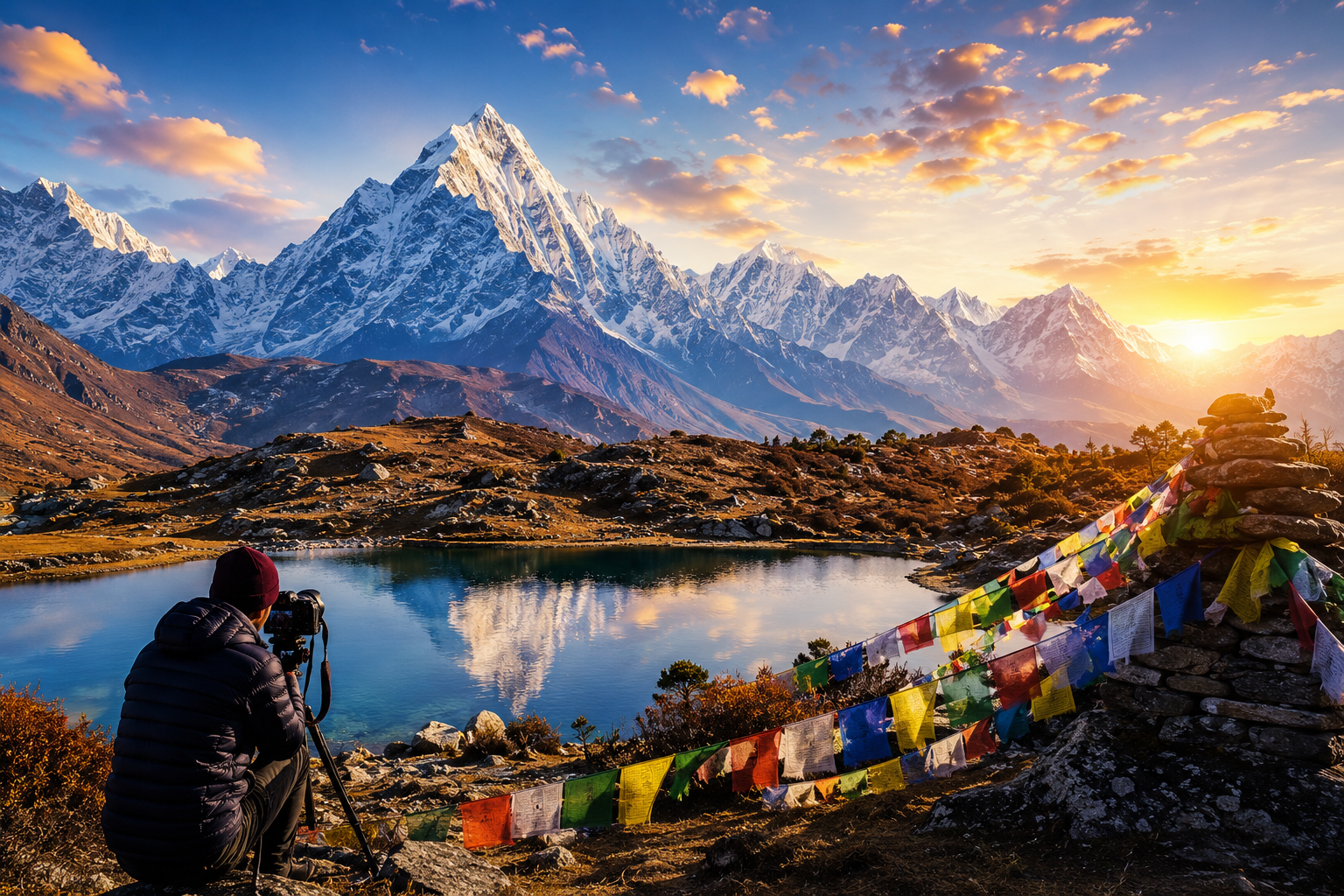
Shoot: symmetrical mountain reflections at dawn; a lone wooden boat for a serene focal point. Tip: the calmest water — and best reflections — is usually right at first light, before the breeze picks up. A polarising filter helps manage glare.
6. Upper Mustang & Kagbeni — Nepal's High Desert
Cross to the far side of the Annapurnas and the landscape transforms completely. The Mustang region, along the deep Kali Gandaki gorge, is a stark, wind-carved high desert of ochre cliffs, ancient caves, and Tibetan-style villages like Kagbeni — a world away from the green hills, and utterly unlike anywhere else in Nepal.
Shoot: dramatic eroded cliffs and canyon lines; earthy villages against barren mountains. Tip: the light here is harsh at midday, so shoot early and late when long shadows reveal the texture of the terrain. Because it lies in a rain shadow, it's also photographable during the monsoon.
7. Rara Lake — Nepal's Pristine Blue Jewel
Remote and largely untouched, Rara Lake in Nepal's far northwest is the country's largest lake — a brilliant sheet of blue ringed by forested hills and snow peaks. Its isolation is exactly what makes it special: pristine, quiet, and reflective, with barely another photographer in sight.
Shoot: the lake's colour shifting with the light; mountains mirrored in glassy water. Tip: it takes effort to reach, so plan extra days — and you'll be rewarded with some of the most unspoiled scenery in the Himalaya.
8. Bandipur — A Hilltop Town Above the Clouds
For a blend of culture and landscape, the preserved Newari town of Bandipur sits on a ridge between Kathmandu and Pokhara, its old stone streets opening onto sweeping Himalayan views. Mornings often bring mist pooling in the valleys below, with the peaks rising clear above — a magical mix of heritage foreground and mountain backdrop.
Shoot: the town's traditional architecture framed against distant peaks; valley mist at dawn. Tip: wander the side lanes for foreground interest — carved windows, prayer flags, and cobbled streets add depth and a sense of place.
Tips for Getting the Best Landscape Shots in Nepal
A few things will dramatically improve your results anywhere in the country:
Time your trip for clear skies. Autumn (October–November) offers the crispest, clearest mountain views, while spring (March–April) adds warmer light and blooming rhododendrons. Post-monsoon skies are especially clean.
Chase the golden hours. Himalayan light is at its most magical around sunrise and sunset. Midday tends to be flat and hazy, so plan your key shots for dawn and dusk.
Pack for cold and altitude. Batteries drain fast in the cold — keep spares warm in an inside pocket. A sturdy travel tripod is invaluable for low-light sunrises and reflections.
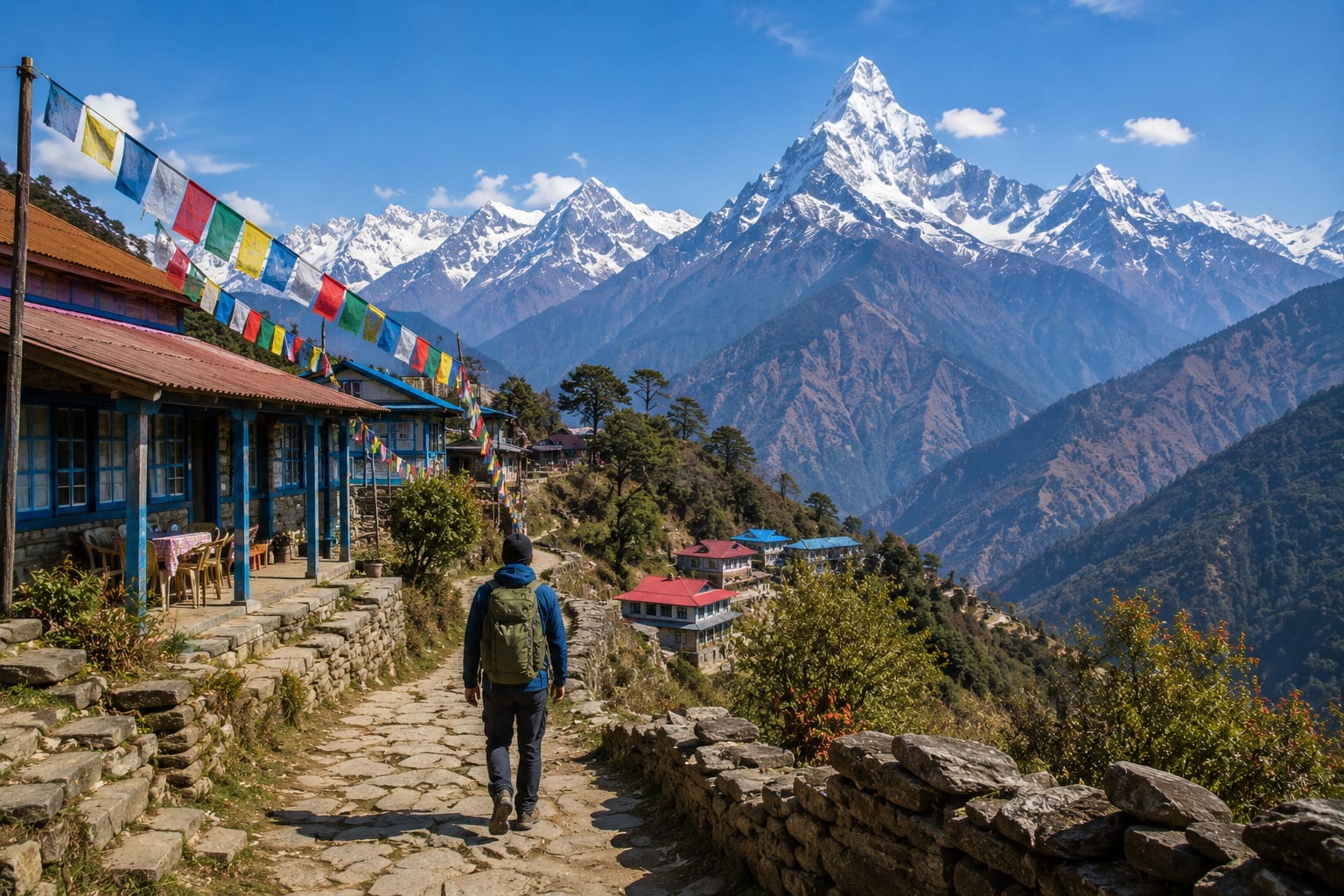
Use foreground for depth. Prayer flags, boats, trekkers, and traditional architecture give scale and lead the eye into those vast mountain scenes.
Respect the rules and the culture. Drone use in Nepal requires permits and is restricted near airports and heritage sites, so check the current regulations before flying. Always ask before photographing people, and be mindful at religious sites.
Capture Nepal With Local Guidance
Reaching these locations at the right moment — the pre-dawn viewpoint, the still-water reflection, the clear post-monsoon panorama — often comes down to timing and local know-how. At Get Tours Nepal, we've spent over 25 years helping travelers explore the country, and we can build a photography-focused itinerary around the light, the seasons, and the scenes you most want to capture, with licensed local guides who know exactly where — and when — to be.
Final Frame
Few countries pack as much visual drama into as small a space as Nepal. From the golden sunrise at Sarangkot to the misty valleys of Nagarkot, the mirror of Phewa Lake to the high desert of Mustang, every corner offers something worth framing. Bring your camera, chase the light — and let Nepal do the rest.
Ready to plan your photography adventure? Contact Get Tours Nepal and we'll help you reach Nepal's most stunning landscapes at their most beautiful.
Marcus Webb
Travel Writer & Nepal Explorer
Passionate about Nepal's trails, culture, and cuisine. Has trekked over 2,000km of Himalayan routes and written for leading travel publications.
Ready to explore?
Book Your Nepal Adventure
Let our local experts craft your perfect Nepal itinerary.
Browse ToursContact Us