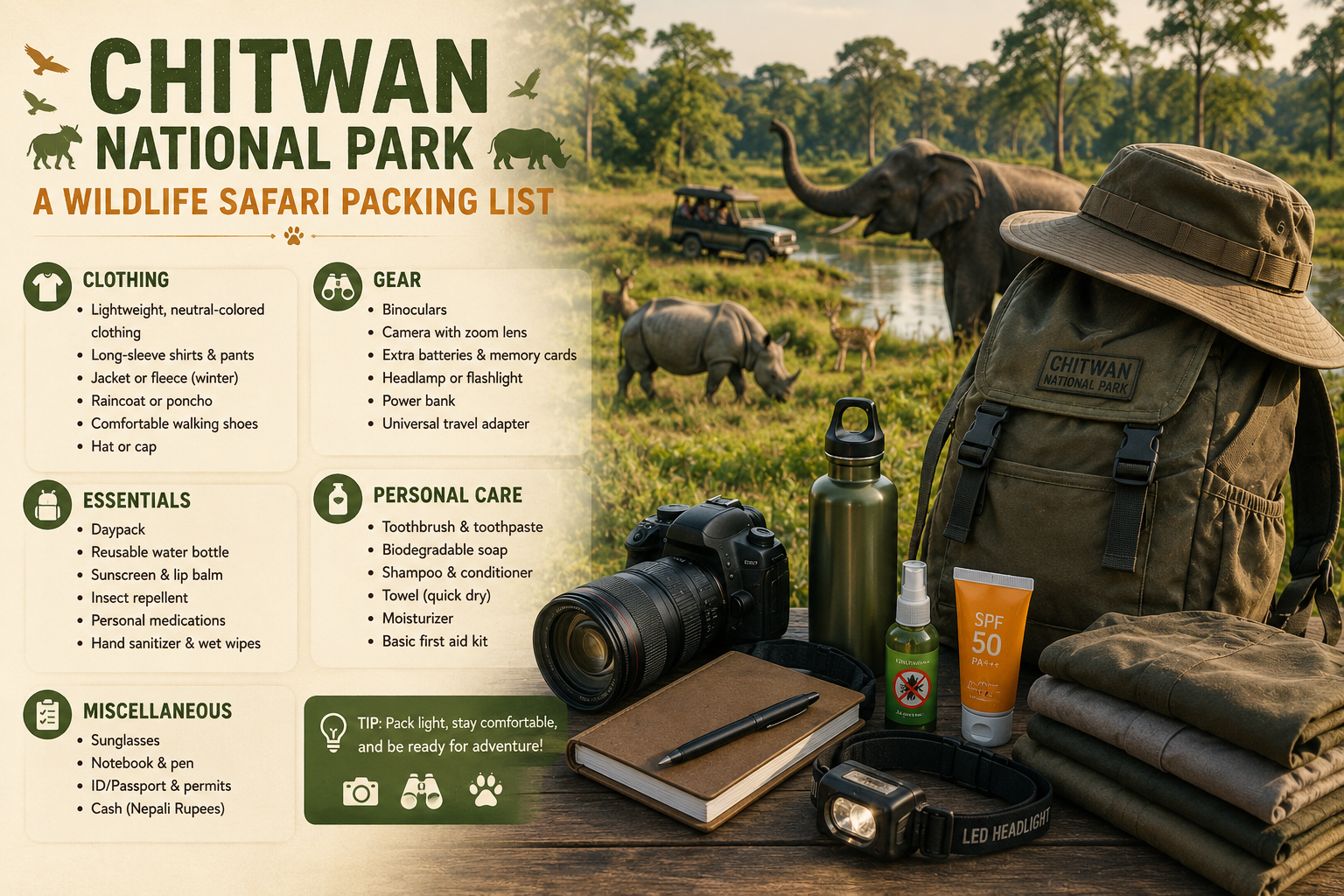
Chitwan National Park: A Wildlife Safari Packing List
Ram Tharu
Travel Writer
Heading to Chitwan for a jungle safari? Pack smart with this definitive gear guide so you don't miss a thing — or get eaten by mosquitos.
Trade the mountains for the jungle. In Nepal's steamy southern lowlands, Chitwan National Park — the country's first national park and a UNESCO World Heritage Site — offers one of Asia's great wildlife experiences. This is the land of the one-horned rhinoceros, the elusive Bengal tiger, wild elephants, crocodiles, and hundreds of bird species, all set in a lush subtropical world of grasslands, sal forests, and winding rivers.
But a jungle safari is a very different trip from a Himalayan trek, and packing right makes all the difference between a comfortable adventure and a sweaty, bug-bitten one. Here's everything you need to bring for a wildlife safari in Chitwan.
First, a Word on What to Wear
Wildlife viewing rewards those who blend in. A few simple principles will improve both your comfort and your chances of great sightings:
Stick to neutral, earth-tone colours — khaki, olive, brown, and beige. Avoid bright colours and stark white, which stand out to animals, as well as very dark clothing that attracts insects.
Cover up. Long, lightweight sleeves and trousers protect you from the strong sun, thorny grasses, and — importantly — insects, especially on jungle walks and canoe trips.
Skip strong perfumes and scented products, which can attract insects and disturb wildlife.
Choose breathable fabrics. Chitwan is hot and humid for much of the year, so light, quick-drying materials beat heavy cotton.
Clothing
Lightweight, long-sleeved shirts (earth tones)
Lightweight long trousers, plus a pair of shorts for downtime
A few breathable T-shirts
A warm layer or fleece — mornings and evenings can be surprisingly cool, especially in winter (December–February)
Lightweight rain jacket or poncho (essential in the monsoon, useful any time)
Wide-brimmed hat or cap for sun protection
Swimwear (for lodge pools or riverside relaxation)
Comfortable sleepwear
Footwear
Closed, comfortable walking shoes or trainers for jungle walks and jeep safaris
Sandals or flip-flops for around the lodge
A pair of socks that can get dirty — jungle trails can be muddy, especially after rain
Sun and Insect Protection
Insect repellent (with DEET or a proven alternative) — one of the most important items you'll pack
High-SPF sunscreen — the lowland sun is intense
Lip balm with SPF
Sunglasses
After-bite cream or antihistamine for insect bites
Health and First Aid
Any personal prescription medications
A small personal first-aid kit (plasters, antiseptic, pain relief, rehydration salts, anti-diarrhoea medicine)
Hand sanitiser and wet wipes
Tissues / travel toilet paper
Health tip: the Terai lowlands have a different health profile from the mountains, so check the current travel-health advice for Nepal and speak to your doctor about recommended vaccinations and any malaria precautions well before you travel.
Safari Gear and Electronics
This is where a wildlife trip really differs from other travel:
Binoculars — arguably the single most valuable thing you can bring. Much of the wildlife is spotted at a distance, and good binoculars transform the experience.
Camera with a telephoto/zoom lens — for rhinos, birds, and (if you're lucky) a tiger from afar
Plenty of spare batteries and memory cards — humidity and long days drain both
A power bank — lodges may have limited charging
A dry bag or waterproof pouch — essential for canoe trips to protect your gear from splashes
Headlamp or small torch — handy for early starts, evening walks, and power cuts
A small pair of quiet, easy-open bags (crinkly plastic can spook wildlife)
Documents, Money, and Essentials
Passport and a copy; any required ID
Travel insurance details (make sure it covers your activities)
Cash in local currency for tips, drinks, and souvenirs — ATMs are limited near the park
Your tour or lodge booking confirmation
Note: national park entry permits are usually arranged by your tour operator or lodge, so you rarely need to organise these yourself — but confirm in advance.
Practical Extras
Reusable water bottle — stay hydrated in the heat and cut down on plastic
Small daypack — for carrying water, camera, and layers on safari
Quick-dry travel towel
Zip-lock bags to keep electronics and documents dry
A book or field guide to Nepal's wildlife and birds
Earplugs (the jungle is wonderfully, and sometimes loudly, alive at night)
Pack for the Season
Chitwan's climate shapes what you'll need:
October–March (best season): warm, dry days and cooler mornings and nights. Bring that extra layer for early game drives. This is the most comfortable time to visit and offers excellent wildlife viewing as animals gather near water.
April–June (hot season): very hot and humid, but often the best time to spot tigers and other wildlife as they come to the rivers and waterholes. Prioritise sun protection, hydration, and the lightest clothing.
July–September (monsoon): lush and green but wet, with rain gear essential and some activities affected by high rivers.
What NOT to Bring
Bright or white clothing that startles wildlife
Strong perfumes, colognes, or heavily scented products
Noisy gear and, on walks, anything that rustles loudly
Unnecessary valuables
Experience Chitwan With Get Tours Nepal
A great safari is about being in the right place at the right time — and that comes from local expertise. At Get Tours Nepal, we've spent over 25 years helping travelers explore the country, including wildlife adventures in Chitwan with experienced naturalist guides. From jeep safaris and canoe trips to guided jungle walks, birdwatching, and visits to traditional Tharu villages, we'll handle the logistics and permits so you can focus on the wildlife. Just tell us what you hope to see, and we'll build the trip around it.
Final Thoughts
Chitwan is a completely different side of Nepal — humid, wild, and teeming with life. Pack light, dress in earth tones, protect yourself from sun and insects, and don't forget those binoculars, and you'll be ready for one of the most thrilling wildlife experiences in Asia. The rhinos are waiting.
Ready to swap the peaks for the jungle? Contact Get Tours Nepal to plan your Chitwan wildlife safari.
Ram Tharu
Travel Writer & Nepal Explorer
Passionate about Nepal's trails, culture, and cuisine. Has trekked over 2,000km of Himalayan routes and written for leading travel publications.
Ready to explore?
Book Your Nepal Adventure
Let our local experts craft your perfect Nepal itinerary.
Browse ToursContact Us