A Spiritual Journey to Lumbini: Birthplace of the Buddha
Anita Shrestha
旅行ライター
Lumbini is one of the holiest places on Earth. Here's how to make the most of a visit to the birthplace of Siddhartha Gautama, the founder of Buddhism.
In the quiet plains of southern Nepal lies one of the most sacred places on earth. Lumbini — the birthplace of Siddhartha Gautama, the Buddha — is where, more than 2,500 years ago, a prince was born who would go on to found one of the world's great spiritual traditions. Today, this UNESCO World Heritage Site draws pilgrims and travelers from every corner of the globe, all seeking the same thing: a moment of peace in the place where it all began.
A journey to Lumbini is not just sightseeing. It is a step into the heart of Buddhist history, and for many, a deeply moving spiritual experience.
The Place Where the Buddha Was Born
According to tradition, it was here, in a peaceful garden, that Queen Maya Devi gave birth to Prince Siddhartha in the 6th century BCE while travelling to her parents' home. The child would grow up in nearby Kapilavastu, renounce his royal life in search of truth, attain enlightenment, and become known to the world as the Buddha — "the Awakened One."
That single event transformed a quiet grove in the Terai lowlands into one of the four holiest sites in Buddhism, alongside Bodh Gaya, Sarnath, and Kushinagar in neighbouring India. To stand in Lumbini is to stand at the very source of a tradition followed by hundreds of millions of people worldwide.
The Sacred Garden and Maya Devi Temple
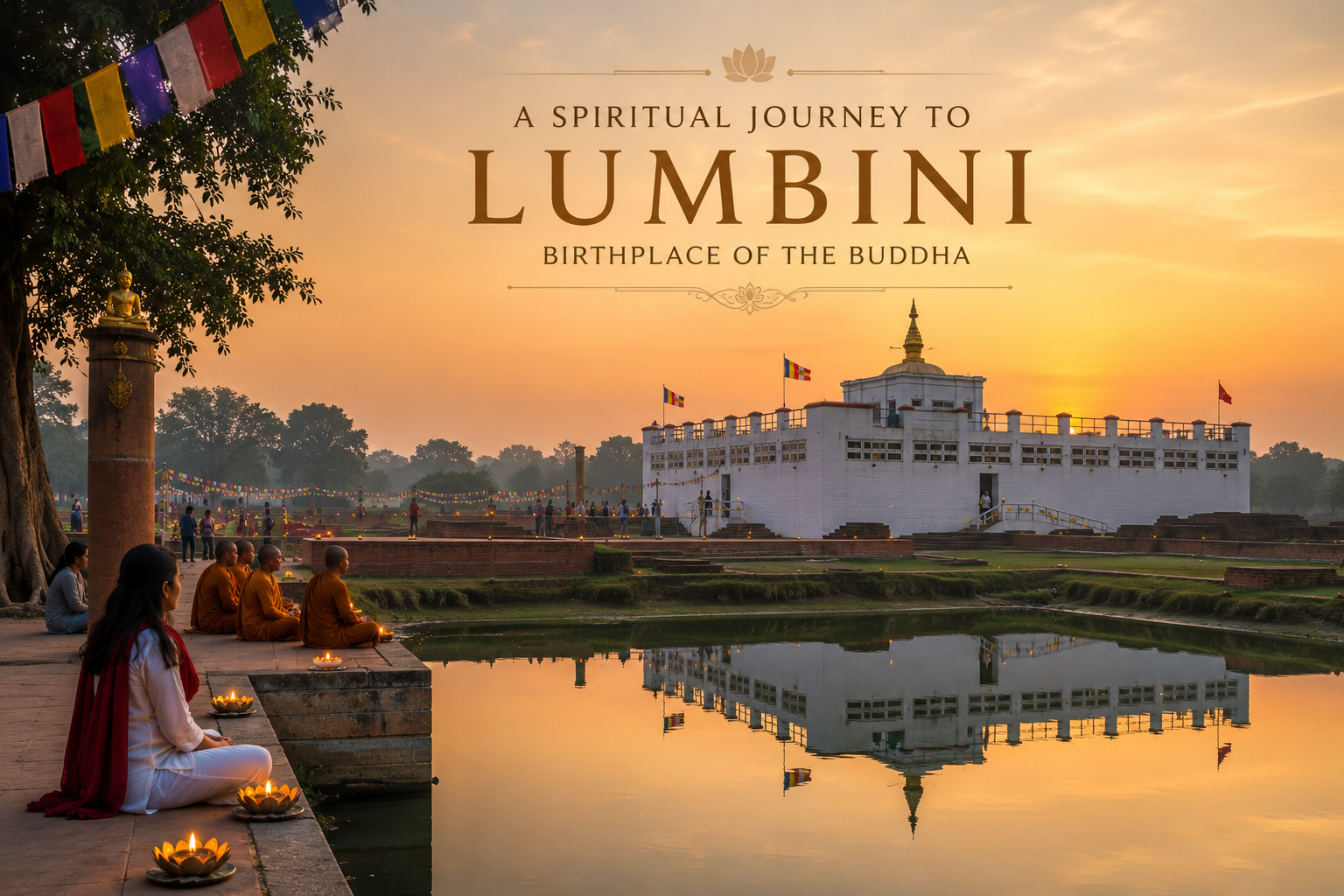
At the spiritual centre of Lumbini lies the Sacred Garden, a serene expanse of lawns, ponds, and ancient ruins shaded by trees hung with fluttering prayer flags. The heart of it all is the Maya Devi Temple, which marks the exact spot believed to be the Buddha's birthplace.
Inside, visitors can see the marker stone said to pinpoint the birth spot, along with an ancient nativity sculpture depicting the scene of Maya Devi giving birth. Just outside lies the Puskarini, the sacred pond where, according to legend, Queen Maya Devi bathed before the birth and the infant Buddha received his first bath. Beside it stands a great Bodhi tree, its branches draped in colourful prayer flags, where monks and pilgrims sit in quiet meditation.
The atmosphere here is unlike anywhere else — hushed, reverent, and timeless.
The Ashoka Pillar: History Set in Stone
Near the temple stands one of Lumbini's most historically important treasures: the Ashoka Pillar. Erected around 249 BCE by the great Indian Emperor Ashoka during his pilgrimage to the site, the pillar bears an inscription confirming that this was indeed the birthplace of the Buddha.
This makes Lumbini not just a place of faith but a site of verified history — the inscription is among the earliest physical evidence tying the location to the Buddha's life, and it has guided pilgrims and scholars to this spot for over two thousand years.
The Monastic Zone and World Peace
What makes modern Lumbini truly remarkable is the vast monastic zone that surrounds the Sacred Garden . Developed under a master plan designed by the celebrated architect Kenzo Tange, this area is home to dozens of monasteries built and maintained by Buddhist countries and communities from around the world.
Wandering — or cycling — through the complex, you pass richly decorated temples in the distinct architectural styles of Thailand, Myanmar, China, Tibet, Germany, and many more nations, each an offering of devotion. A long central canal and the eternal peace flame run through the heart of the site, and the gleaming white World Peace Pagoda rises nearby. Together, they turn Lumbini into a living symbol of the Buddha's universal message of peace, shared across cultures and borders.
Beyond Lumbini: The Footsteps of a Prince
For those wishing to go deeper, the surrounding region holds more of the Buddha's story. Nearby Tilaurakot is widely believed to be the site of ancient Kapilavastu, the palace kingdom where Prince Siddhartha spent his early life before renouncing the world. Walking among its quiet ruins, you can imagine the young prince who once lived in luxury here, unaware of the path that would one day lead him to enlightenment.
These lesser-visited sites add rich context to a Lumbini pilgrimage, tracing the arc from the Buddha's birth to his great renunciation.
Experiencing Lumbini
More than any single monument, it is the atmosphere of Lumbini that stays with visitors. This is a place made for slowing down. Pilgrims circle the temple in silent devotion, monks chant in the monasteries, and travelers find quiet corners to sit, breathe, and reflect.
Many come specifically to meditate, and several monasteries welcome visitors for meditation sessions or quiet contemplation. Others simply cycle the peaceful pathways, visit the international temples, and let the calm settle over them. However you experience it, Lumbini invites a rare kind of stillness.
Practical Tips for Your Visit
Getting there: Lumbini lies in Nepal's southern Terai, reachable by road from Kathmandu or Pokhara, or via the nearby airport at Bhairahawa. It also pairs naturally with a Chitwan safari, as both lie in the lowlands.
Best time to visit: October to March offers the most comfortable weather; the pre-monsoon months can be very hot, and the monsoon brings heat and rain.
What to wear: dress modestly out of respect for the sacred setting — cover shoulders and knees — and be prepared to remove your shoes at temples.
Etiquette: move quietly, ask before photographing monks or people at prayer, and follow the signs and customs at each monastery . This is an active place of worship.
Time needed: a full day allows you to see the Sacred Garden and monastic zone comfortably; an overnight stay lets you experience the profound calm of early morning and evening.
Journey to Lumbini With Get Tours Nepal
A pilgrimage to Lumbini is most rewarding when you can focus on the experience rather than the logistics. At Get Tours Nepal, we've spent over 25 years guiding travelers through the country's spiritual and cultural heart. We can arrange a seamless journey to Lumbini — with comfortable transport, thoughtful itineraries, and knowledgeable local guides who bring the history and meaning of each site to life — and combine it with Chitwan, Kathmandu, or your wider Nepal trip. Whether you come as a pilgrim or a curious traveler, we'll help you experience Lumbini's peace in full.
Final Reflection
Lumbini is more than a destination — it is a place of origins, where the story of the Buddha began and where his message of peace still echoes across the centuries. To walk its sacred garden, sit beneath its Bodhi tree, and feel the stillness of this ancient ground is to touch something timeless. For seekers, pilgrims, and travelers alike, a journey to Lumbini is one the heart does not forget.
Ready to begin your spiritual journey? Contact Get Tours Nepal to plan your visit to Lumbini, the birthplace of the Buddha.
Anita Shrestha
旅行ライター&ネパール探検家
ネパールのトレイル、文化、料理に情熱を持ち、2,000km以上のヒマラヤルートをトレッキングし、主要な旅行誌に執筆してきました。