Escursione a Phulchoki da Godawari: itinerari, tariffe, uccelli
Get Tours Team
Scrittore di viaggi
Escursione di un giorno a Phulchoki da Godawari: itinerari e tariffe
Escursione a Phulchoki da Godawari: percorsi, orario, tariffa dell'autobus e uccelli
Risposta rapida: Phulchoki (scritto anche Phulchowki) è un'escursione di un'intera giornata da Godawari, sul bordo sud-orientale della valle di Kathmandu, che raggiunge circa 2.750 m. La nostra escursione nell'ottobre 2026 ha richiesto circa 4 ore di salita e da 1,5 a 2 ore di discesa. Gli autobus da Ratna Park via Lagankhel costano circa Rs 50 a persona. Ci sono due percorsi: una lunga strada dolce e un sentiero più ripido.
Di Prabesh Paudel, Operations Manager, GET Tours. Escursionismo sabato 3 ottobre 2026. Dettagli pratici controllati l'ultima volta a novembre 2026.
Io e la mia ragazza abbiamo fatto questa escursione come una gita di un giorno spontanea, abbiamo preso la strada sbagliata per un po', siamo stati nutriti con il pranzo da tre estranei in cima e siamo caduti con le ginocchia doloranti. Questa è la versione onesta, più tutto ciò che ho controllato in seguito in modo da non doverlo fare.
Come è iniziata la nostra escursione a Phulchoki?
Abbiamo deciso venerdì sera. Arrivò a casa mia verso le 7 del mattino di sabato, presi la bici e andammo dritti verso Godawari. Lungo la strada ci siamo fermati per la colazione: ceci, tè e una samosa.
Tre donne al tavolo accanto ridevano, fumavano e chiacchieravano. Quando abbiamo detto che stavamo salendo su Phulchoki, ci hanno detto di andare in bicicletta fino in fondo, perché il percorso è molto lungo e facile da perdere. Volevamo fare un'escursione, quindi abbiamo parcheggiato ai piedi della collina a Godawari, dove ci sono molti negozi.
Costo parcheggio bici Rs 10. Abbiamo anche pagato un deposito rimborsabile di Rs 100 e ricevuto una carta, che è lì in modo che gli escursionisti non lascino rifiuti alimentari o involucri sul sentiero. Il punto di partenza era affollato: un gruppo di appassionati di birdwatching con il binocolo, bambini, squadre di escursionisti e uno straniero.
Perché siamo finiti sulla strada invece che sul sentiero escursionistico?
Il primo tratto era asfaltato, con un fiume che scorreva accanto. L'acqua era bianchissima e non ho mai scoperto il suo nome. Tutto era pulito e ben tenuto. Gli uccelli erano ovunque, l'aria era fresca e il cielo era nuvoloso come se potesse piovere, anche se non è mai successo.
Superammo un cartello che diceva che Phulchoki era a 14 km di distanza sul "circuito completo". Nessuno di noi due era mai stato qui prima, quindi non ci siamo resi conto che il sentiero escursionistico e la strada sono percorsi diversi. Continuammo a camminare lungo la strada, che era larga, silenziosa e dolce. Altre persone lo stavano usando, quindi pensavamo di essere sulla strada giusta.
La strada era facile e tranquilla: foresta profonda, molti alberi, funghi lungo i bordi e una famiglia che faceva un picnic con due bambini piccoli. La vista era per lo più bloccata dagli alberi, ma potevamo essere rumorosi e sciocchi perché non c'era nessuno in giro.
Intorno all'indicatore di 9 km abbiamo incontrato di nuovo il gruppo dall'inizio del sentiero. Avevano preso il vero sentiero escursionistico e stavano riposando davanti a noi. Avevo già individuato il sentiero, ma eravamo rimasti sulla strada perché era più tranquillo. Questa volta ci siamo uniti a loro.
Com'è il sentiero escursionistico Phulchoki rispetto alla strada?
Il sentiero era molto più ripido, con scale, terra libera e cespugli, e non sembrava ben tenuto. Abbiamo guadagnato velocemente altezza. Era anche affollato: un escursionista messicano, alcuni ragazzi indiani e un gruppo di amici in età scolare che suonavano musica senza alcun insegnante in vista. Era divertente, ma la pace della strada era sparita.
Portai tutto: due bottiglie d'acqua, due samosa, un pacchetto di Lay's e spaghetti. Sorseggiammo l'acqua con cura e facemmo brevi pause, poiché avevamo ancora molta arrampicata da fare.
In una sezione cespugliosa una sanguisuga mi è salita sulla gamba (ero in pantaloncini). L'ho spento, e quella è stata la fine.
Dopo un po' raggiungemmo il primo vero punto di vista. Altri escursionisti stavano riposando, la valle era sotto di noi e la nebbia si stava facendo sentire. Abbiamo scattato foto e mangiato patatine per circa 5-7 minuti. Anche allora, i panorami rimanevano limitati, per lo più foreste, radici e passeggiate. Se ti aspetti grandi panorami per tutto il tragitto, potresti rimanere deluso.
Quanto dista la vetta quando qualcuno dice "15 minuti"?
Più di quanto pensino. Circa tre ore dopo, il sentiero si mescolava a una strada accidentata che auto e moto potevano percorrere. Abbiamo visto un'auto che trasportava tre donne salire per motivi religiosi e alcuni escursionisti seri che ci hanno sorpassato casualmente. Passammo un lago con una tavola che si chiamava Suryakunda. Non sono convinta che fosse quella vera. Sembrava cupo, come un lago da film horror.
Chiesi a un escursionista serio quanto fosse lontana la cima. "15 minuti", disse. Ce ne sono voluti altri 45. Abbiamo visto uccelli, insetti e persino una scimmia, il che mi ha sorpreso. Poi raggiungemmo un cancello e un uomo in bicicletta ci disse che era a 100 metri di distanza. Anche per questo ci è voluto un po'.
Cosa c'è in cima a Phulchoki?
Vicino al cancello c'erano dei negozi, tutti chiusi. Non ci fermammo e proseguimmo per una breve salita oltre alcuni Shivalinga fino alla vetta. In cima c'è una torre di rete e una postazione dell'esercito con filo spinato intorno a un'area riservata. La vetta viene coperta di nuvole circa ogni 15 minuti. Alla postazione dell'esercito abbiamo scritto solo il nostro nome e l'ora.
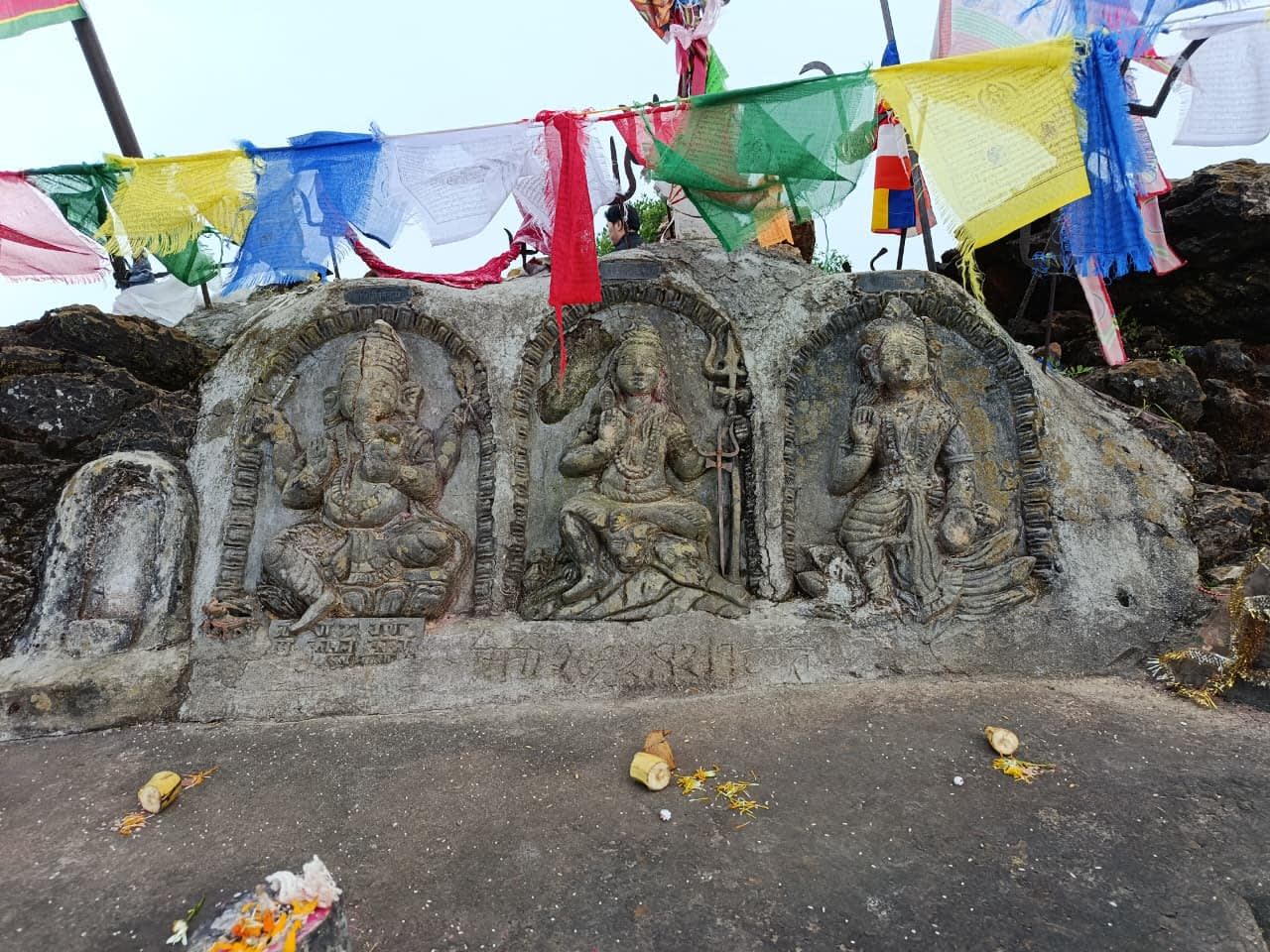
Era affollato, con persone che scattavano foto e festeggiavano. Le tre donne che avevamo incontrato a colazione erano lì a fare un serio puja, e vidi anche una capra sacrificata come offerta. C'erano statue di Shiva, Ganesh e Devi, un chaitya buddista e un campanello che suonava. Ci siamo tolti le scarpe e abbiamo camminato a piedi nudi per un po', il che è stato fantastico.
Chi ci ha dato da mangiare a Phulchoki?
Tornando nell'area del negozio, le stesse tre donne stavano mangiando il pranzo che avevano portato. Avevo sete, avevano Mountain Dew e glielo chiesi gentilmente. Mi hanno dato un bicchiere e poi ci hanno offerto anche il loro cibo: riso sbattuto, patate cotte, soia e sottaceti. La mia ragazza è vegetariana, quindi abbiamo saltato i fagioli cotti con l'uovo. There were no spoons, so we ate with our hands.
We never touched our own samosas. It was the best meal of the day, and it came from strangers.
Is the descent from Phulchoki harder than the climb?
For us, yes. We took the hiking trail down, and it was tougher than the climb. My knees hurt, the shortcuts were slippery, and one section dropped at almost 90 degrees. My girlfriend was taking her time there, and a group behind us rushed and one person fell. I asked them to wait and let people climb down first. Please don’t rush on that stretch.
At one point her tight shoes squeezed her toes badly. I gave her mine to wear, and we continued. Some trail sections made her nervous, so we took the road for parts, which was faster. We heard people cutting trees, but they were only dead ones.
The last long trail section was the part we’d skipped on the way up. It had stairs, uneven ground, even a dried waterfall, and trail markings showing we weren’t lost, though sometimes it felt that way. It took about 1 hour. At the bottom we were exhausted and got our Rs 100 deposit back. We still had to ride the bike home.
Phulchoki Hike: Quick Facts (Checked November 2026)
How do I get from Kathmandu to the Phulchoki trailhead?
The Phulchoki hike starts at the Godawari bus stop, roughly 15 to 18 km south-east of central Kathmandu. From Ratna Park, take a bus or minivan to Lagankhel (around Rs 25, 20 minutes), then a minivan to Godawari (around Rs 25, 30 minutes). In total that is around Rs 50 per person . Check fares on the day, as they can change.
Can I use Pathao, inDrive, or Yango to reach Godawari?
Yes. Pathao shows a fixed fare upfront, inDrive lets you propose your own price, and Yango launched in Kathmandu in 2025. A car from central Kathmandu to Godawari costs around Rs 1,300 on the apps, and bike rides cost roughly half the car rate. Prices change with demand, and you need a local phone number to use the apps.
How long does the Phulchoki hike take?
Our Phulchoki hike from Godawari took about 4 hours up and 1.5 to 2 hours down in early October 2026, including short rests. One tour operator estimates 4 to 5 hours to the summit, depending on fitness. Plan for a full day, start early, and carry water and food, since the shops near the top may be closed.
What are the two routes up Phulchoki?
The Phulchoki hike has two kinds of path: a wide road that winds up gently but takes longer, and a steeper hiking trail with stairs, roots, and shortcuts. We walked the road first without realizing, then switched to the trail. The trail gains height faster but is less maintained. You can mix both.
How hard is the Phulchoki hike?
Phulchoki is a moderate-to-demanding day hike for first-timers, not a casual walk. Published guides give roughly 8 to 10 km one way with about 1,400 m of climbing, while the trailhead signboard we saw said 14 km for the “full circuit”. The descent was harder than the climb for us because of knee strain and slippery shortcuts, so shoes with good grip matter.
How much does the Phulchoki hike cost?
At the Godawari trailhead we paid Rs 10 for bike parking and a Rs 100 refundable deposit, which we got back at the end. The deposit comes with a card meant to stop hikers from leaving food waste and wrappers. Bus travel to Godawari is around Rs 50 per person. At the army post near the top, we only wrote our names and the time.
What birds can I see on Phulchoki?
Phulchoki is one of the best birdwatching spots near Kathmandu. eBird’s checklist for Mt. Phulchowki lists more than 340 species. Commonly reported birds include Great Barbet, Maroon Oriole, Red-billed Blue-Magpie, Fire-tailed Sunbird, White-browed Shrike-Babbler, Small Niltava, Asian Barred Owlet, and Grey-headed Woodpecker. We saw many birds near the start but didn’t identify species.
What mushrooms grow in the Godawari and Phulchoki forest?
A 2011 survey from Godawari up to 2,250 m collected 45 macrofungi species and identified 20, including Agaricus silvicola, Amanita caesarea, Bovista plumbea, and Clavulina cristata. We saw many kinds of mushrooms on the road section. Do not pick or eat wild mushrooms here, because the Amanita genus includes deadly species.
When is the best time to hike Phulchoki?
Autumn (September to November) and spring (March to May) are the best seasons. A month-long festival is reported at the shrine in March and April. We went in early October, and it was cloudy, with valley views opening only in patches. We also met a leech, so check your legs after bushy sections.
What is at the top of Phulchoki?
The Phulchoki summit has a network tower, an army post with a restricted area, statues of Shiva, Ganesh, and Devi, a Buddhist chaitya, and a bell. Worship, including animal offerings, can take place there. The summit is often covered in cloud, and the shops near the top were closed when we arrived.
Is the Phulchoki hike safe?
Mostly, with care. Watch for slippery steep sections on the shortcut trail, leeches in bushy areas, and sudden fog. On the steepest drop, let people ahead of you climb down first. Carry enough water, wear shoes with grip, and don’t rely on distance estimates from other hikers. “15 minutes” turned into 45 for us.
Planning a hike or day trip around the Kathmandu Valley? GET Tours can help you plan it. Visit gettoursnepal.com or contact our team in Kathmandu.
Written by Prabesh Paudel, Operations Manager at GET Tours (Golden Era Travel and Tours Pvt. Ltd.), an NTB-registered tour operator based in Naya Bazar, Kathmandu.
Get Tours Team
Scrittore di viaggi & esploratore del Nepal
Appassionato dei sentieri, della cultura e della cucina del Nepal. Ha percorso oltre 2.000 km di sentieri himalayani e ha scritto per le principali pubblicazioni di viaggio.
Pronto a esplorare?
Prenota la tua avventura in Nepal
Lascia che i nostri esperti locali creino il tuo itinerario perfetto in Nepal.
Sfoglia i tourContattaci